1. Lucy Banney
The droplet silhouette I have designed embodies a narrative of fluidity and transformation, responding to the essence of Iris Van Herpen’s explorations of her theme “water and dreams” in her exhibition “Sculpting the Senses”. Drawing inspiration from the liquidity and ethereal qualities depicted in Van Herpen’s work, my design evokes a sense of sculptural fluidity, with the droplet motif symbolising the convergence of “transparency and chaos”. The design integrates Van Herpen’s theme by imbuing the droplet form with a sense of life and movement, mirroring the dynamic nature of water. Its sculptural, yet ethereal quality resonates with my own aesthetic embracing an architectural approach to shape creation – juxtaposing the structured silhouette with the delicate fabric, and manipulations of the fabrics. Through marrying the droplet motif with the actual construction and contrasting elements, my design captures the essence of Van Herpen’s artistic vision while offering a fresh interpretation that aligns with my own aesthetic and personal flare.
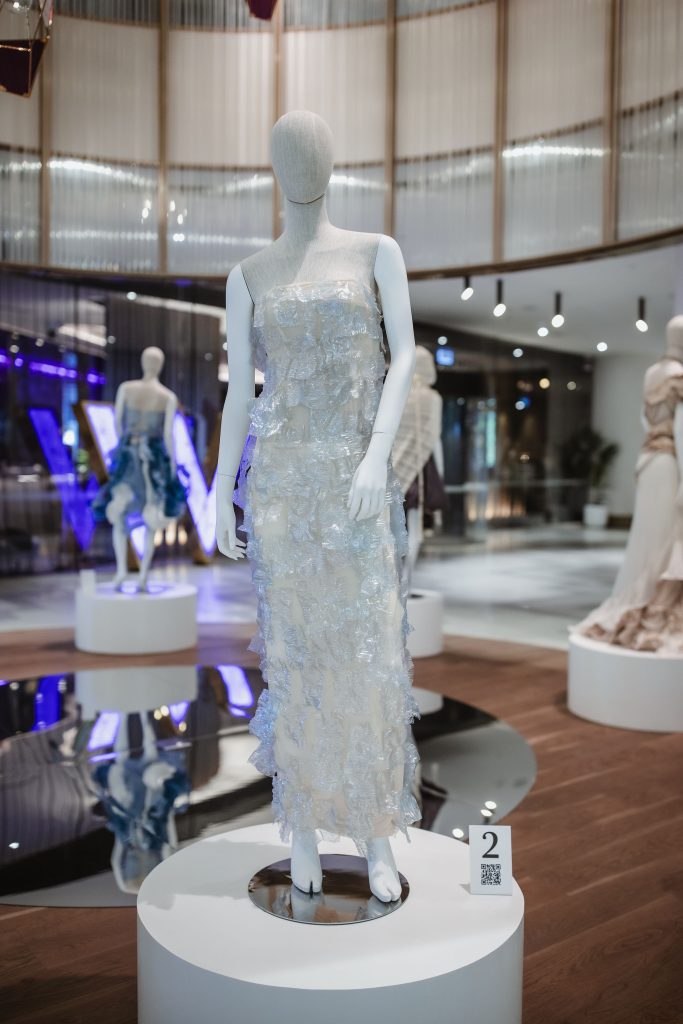
2. Aliza Artani
This silhouette explores Iris van Herpen’s vision of Water and Dreams; one of the many chapters from her magnificent collection, Sculpting the Senses. Water symbolizes movement, whether it be smooth and subtle like a quiet stream or tempestuous and mysterious like the tides out in the deep sea. Through the waves and grooves of melted plastic, this design represents that movement. With plastic panels crossing over each other and an iridescent reflection projecting off, one envisions looking out over the calm blue sea and the sun reflecting a shimmering glow through the ripples. The textural details on this design create an experience for the viewer, rich with emotion and deep in thought.
The use of recycled plastic bottles was inspired by Herpen’s revolutionary application of unique materials and techniques within her incredible pieces. Through experimenting and understanding the behaviour of plastic, the final panels form a unique look that elevates the design. A fitted nude mesh dress creates the perfect canvas for the plastic panels to rest on whilst also introducing a neutral colour tone peeking out from underneath.
Sustainability is a significant aspect of design. This silhouette represents the incorporation of ordinary materials and giving them a new life by transforming and sculpting them into exclusive pieces of art. The plastic bottles not only represent the beauty of water but also the waste that floats among the oceans, displaying a message of awareness and consciousness.
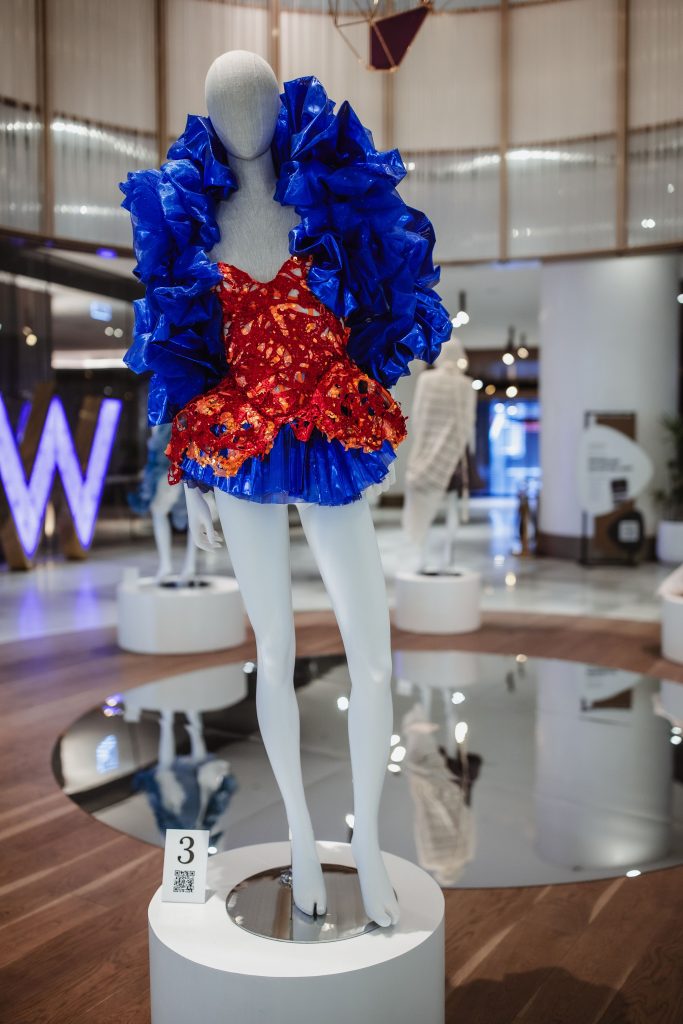
3. Calvin Schuttloffel
The silhouette delves into the mesmerising world of coral reefs, inspired by their unique biodiversity and crucial role in sustaining marine life. With the use of innovative laser-cutting technologies, coral-inspired motifs are intricately crafted on the garment.
James Anastarsia embodies sculptural and exaggerated forms, seamlessly blending artistry with technological innovation. Similar to the process of Iris Van Herpen, James Anastarsia seeks to experiment with laser cutting technology and couture techniques.
The corset adorns the mannequin, encapsulating the structural integrity and organic elegance of coral formations. The corset serves as the focal point, accentuating the model’s figure while evoking resilience and strength. Additionally, the exaggerated gathered boa further enhances the aesthetic, drawing inspiration from waves crashing onto the shore.
Combining traditional couture methods with reclaimed contemporary sustainable fabrics, the silhouette embodies a collaboration of craftsmanship and eco-conscious innovation. Laser-cut coral-inspired motifs handstitched onto the corset, offering a visually stunning homage to The Great Barrier Reef in Australia.
Coral reefs, often hailed as the most biodiverse ecosystems on Earth, surpassing even tropical rainforests, occupy 1% of the ocean floor, yet provide habitat for over a quarter of all marine life. As viewers delve into the intricate details of the silhouette, they are transported to the enchanting world under the sea, where the fragility and beauty of marine life are on full display.
This immersive experience serves as a poignant reminder of the vital importance of ecological conservation efforts.
4. Elisarita Mollo
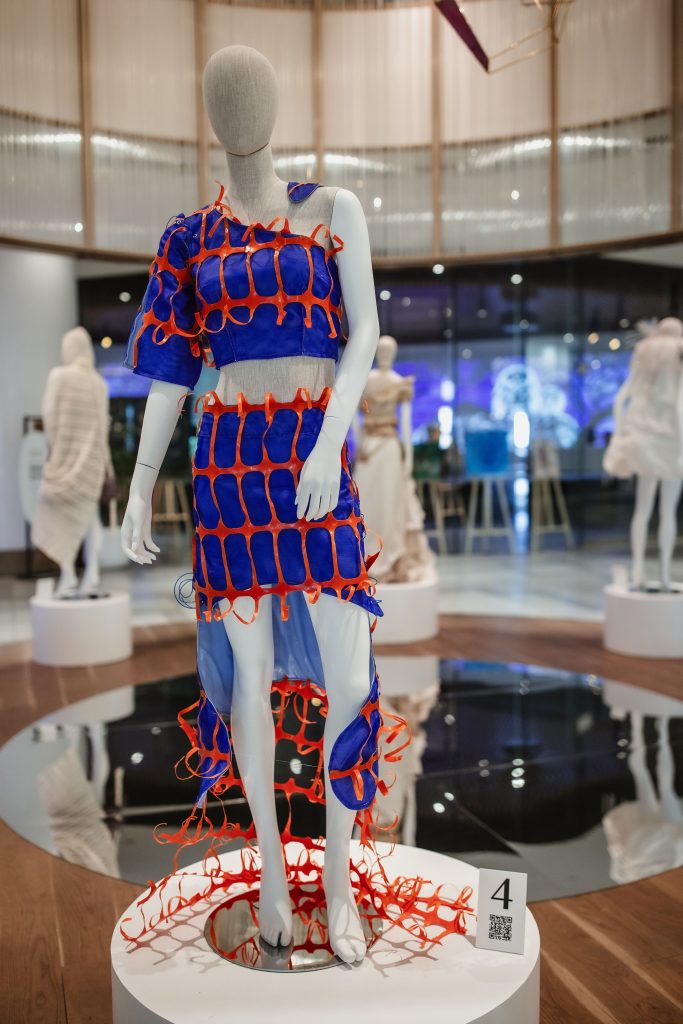
This silhouette was inspired by Iris Van Herpen’s Sculpting the Senses collection which artistically explores movement and shape present in deep sea creatures as well as ocean flora and fauna. This garment has been loosely based off of an octopus’s tentacle, particularly the elements of movement and the shape that a tentacle would carry, which can be seen throughout the silhouette.
As a designer I often enjoy using bright colours, creating volume and taking risks with my garments. Using construction netting as the main material for this garment has allowed me to challenge myself to work outside my comfort zone and create something super unique that hasn’t been done before. My main focus on this silhouette was to create volume in unique and different ways, which, I achieved throughout the skirt as I placed obscure pieces to create the illusion of movement and align with the ideas Van Herpen presents in her garments.
Furthermore, as sustainability is a large part of Iris Van Herpens work, I based this garment around that which lead me to finding my first material, the orange construction netting. This netting inspired the work as I found the holes represented tentacle suckers seen on an Octopus. This material makes up roughly 70% of the garment, combined with rough tulle netting and a lace up, corset style back. I chose not to use zips as these often need to be sourced new to fit the garments requirements and aren’t recycling / garment end of life friendly.
5. Riley Colquist
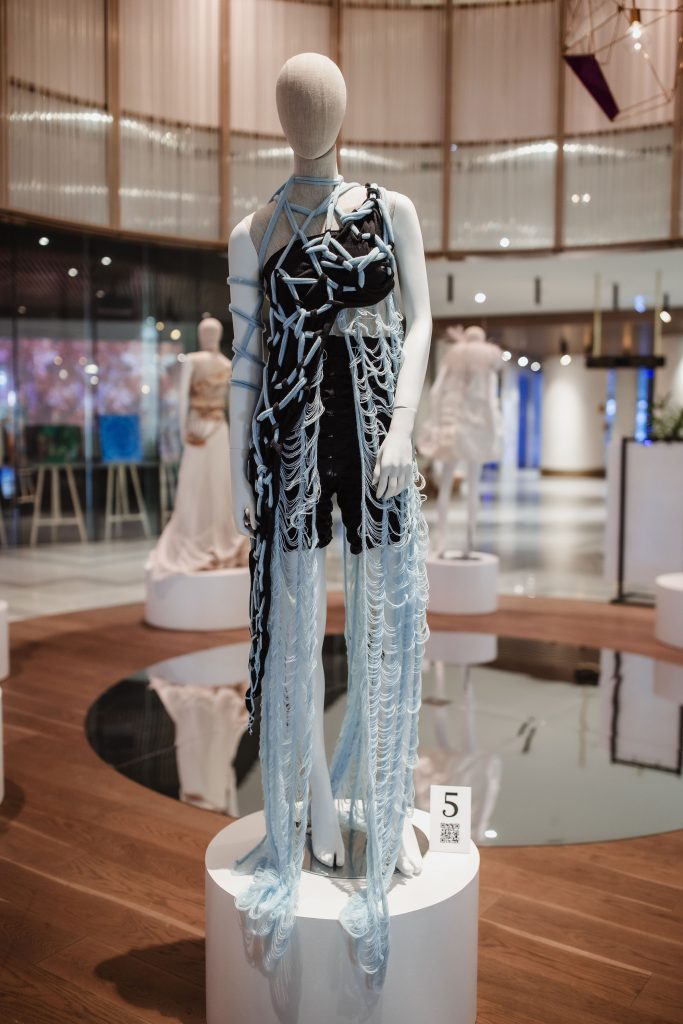
Inspired by Iris van Herpen’s marriage of Water and Dreams, this silhouette aims to explore, excite and entice. Water evokes an array of imagery and emotions with the unwavering depths of the oceans juxtaposed against flowing streams of rivers and still lakes. This is reflected through the delicate threads of the flowing skirt over the repeated patterning of knit shorts lurking beneath. The chaos of the crashing waves threaded through the top underpinned by purposeful loops integrated into its design forming a structured ecological system. These textural details hope to take the viewer on a playful journey, where the unknown is welcomed. While the form offers a genderless silhouette designed to extend opportunity for interaction to all.
Herpen’s deep love of craft and radical use of materials inspired an unorthodox use of knitwear techniques in this design. Through experimental methods, new and unplanned results were discovered. Manifesting in an organic form blending together the many representations of knit just as it does the many facets of water. Entrancing the viewer and offering them the space to dream of this playful world inspired by Herpen.
The silhouette consists of 50% up-cycled blue thread, mixed with Australian Organic Black Cotton. The process of knit lends itself beautifully to sustainability practices as it allows the maker to reuse the materials endlessly until the final outcome is achieved. All garment are knit from a single thread with no fabric cut away to form patterns and no electricity is used by the machinery.
6. Sau Wun Iris Cheng
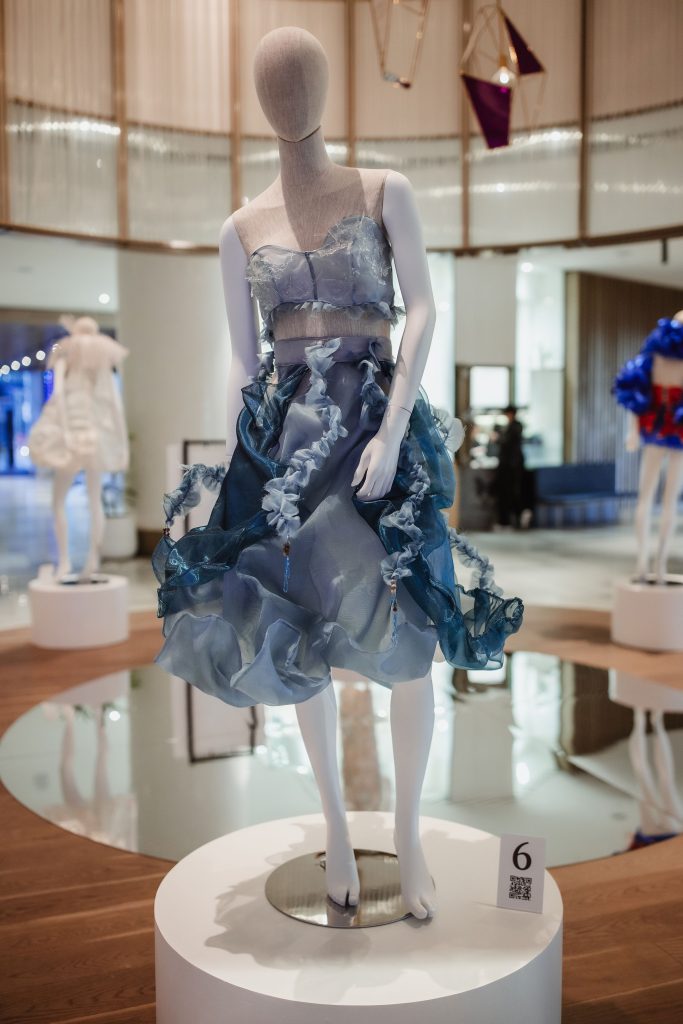
In this silhouette, I found inspiration in the fascinating world of deep-sea creatures and the fluidity of the ocean. To create a design that evokes the essence of the ocean, I used sheer fabrics extensively. The lightweight, layered, and transparent effect achieved by these fabrics lends itself perfectly to the flowing and undulating shapes I aimed to create. The color palette was crucial in creating a design that captures the essence of the ocean’s depths, with its many shades of blue. The use of different shades of blue also added depth and texture to the design. To further emphasize the fluidity and movement of water, I used wires to construct various shapes and silhouettes. This helped me create a sense of dynamism in the design, as it allowed me to create shapes that appear to be in motion. Apart from fabrics, I want to experiment with different materials to enhance my design, and I chose to use UV resin to create a different texture. I created irregular shapes of UV resin and piled them together to form a splash effect of the ocean.
In order to incorporate sustainable practices into my design, I found some materials from Reverse Garbage which sells recycling products. I also reused pattern paper and the same toiles several times in my making process to reduce unnecessary waste. In my design, the dress panels can be transformed by adjusting the wires to create different silhouettes.
7. Amy Johnson
Inspired by Iris van Herpen’s marriage of Water and Dreams, this silhouette aims to explore, excite and entice. Water evokes an array of imagery and emotions with the unwavering depths of the oceans juxtaposed against flowing streams of rivers and still lakes. This is reflected through the delicate threads of the flowing skirt over the repeated patterning of knit shorts lurking beneath. The chaos of the crashing waves threaded through the top underpinned by purposeful loops integrated into its design forming a structured ecological system. These textural details hope to take the viewer on a playful journey, where the unknown is welcomed. While the form offers a genderless silhouette designed to extend opportunity for interaction to all.
Herpen’s deep love of craft and radical use of materials inspired an unorthodox use of knitwear techniques in this design. Through experimental methods, new and unplanned results were discovered. Manifesting in an organic form blending together the many representations of knit just as it does the many facets of water. Entrancing the viewer and offering them the space to dream of this playful world inspired by Herpen.
The silhouette consists of 50% up-cycled blue thread, mixed with Australian Organic Black Cotton. The process of knit lends itself beautifully to sustainability practices as it allows the maker to reuse the materials endlessly until the final outcome is achieved. All garment are knit from a single thread with no fabric cut away to form patterns and no electricity is used by the machinery.
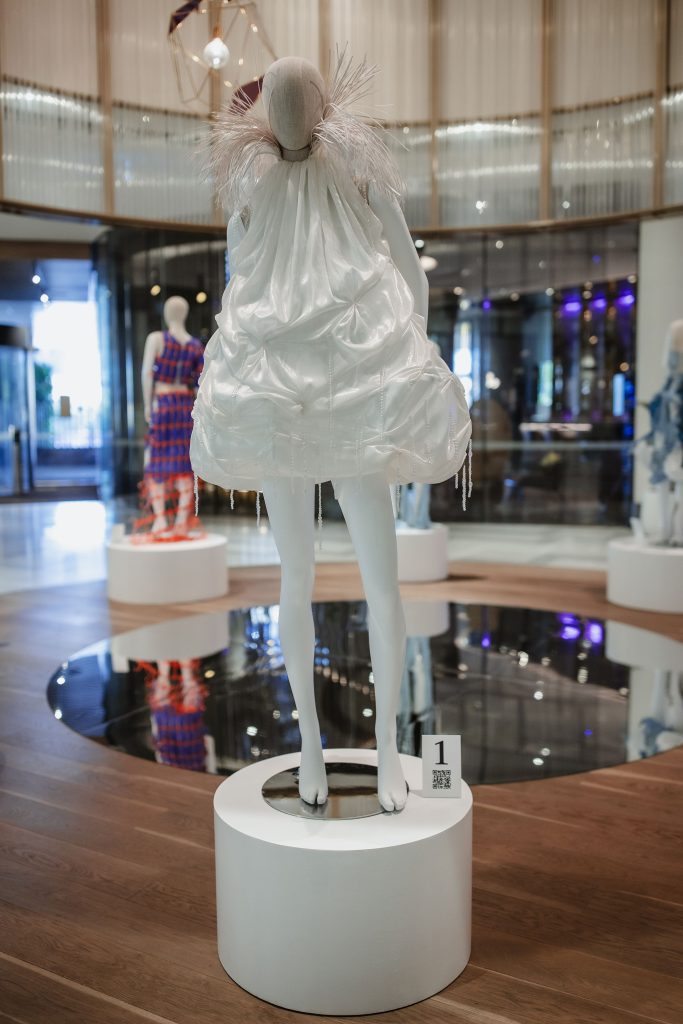
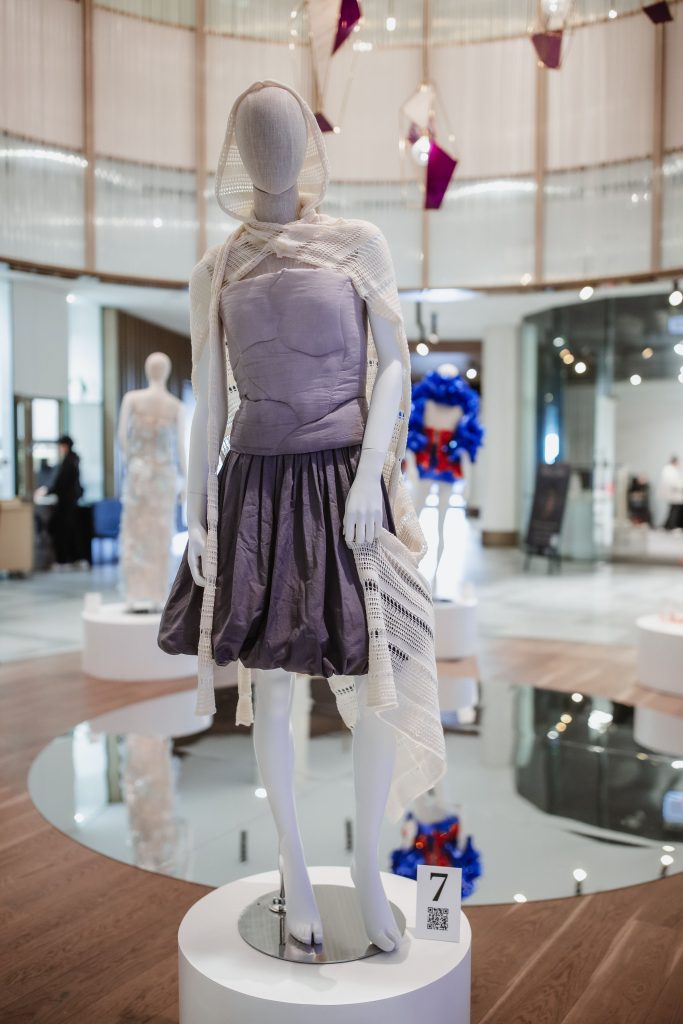
This silhouette draws inspiration from Iris van Herpen’s ‘Water and Dreams’ chapter from ‘Sculpting the Senses’, with a focus on the delicate quality of clouds to shape the silhouette. The source of inspiration being something simple and everyday was decided early on as this approach to design blends my aesthetic with Iris van Herpen’s as she incorporates everyday concepts within her work.
Clouds, with their gentle and airy form, serve as the perfect symbol for an unappreciated beauty within the everyday. The incorporation of the soft, puffy essence of clouds provides the silhouette with a sense of charm and femininity. The design stays true to my personal aesthetic, as I primarily design feminine silhouettes, and I feel this design highlights the softness of femininity well. I aim to not only pay homage to Iris van Herpen’s visionary work, but also to celebrate the fascinating allure of the natural world in all its beauty and simplicity.
I used a lace knit textile for the hood as many of Iris van Herpen’s 3D printed designs remind me of the intricate patterns in lace. By translating her 3D printed designs into knit lace patterns, I have merged my own aesthetic preferences with external influences.
This silhouette consists primarily of secondhand and deadstock fabric, and the 100% merino wool yarn used for the hood was ethically sourced from a woollen mill in NSW. To ensure I am designing responsibly and minimising any negative contribution to the environment, I have focused on the intentional sourcing and selection of textiles and materials.
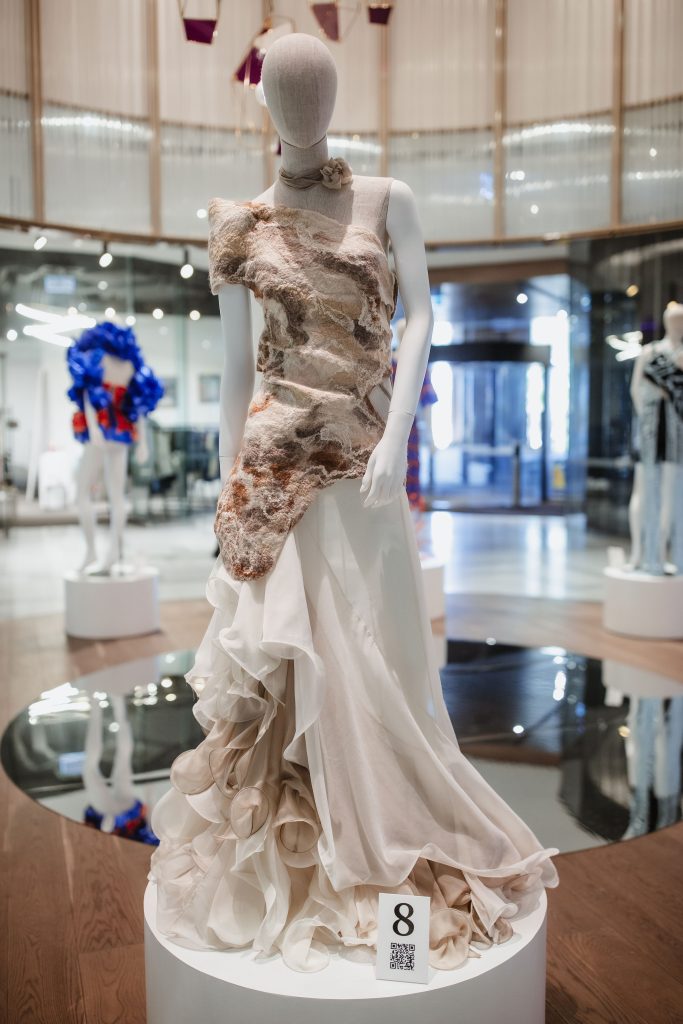
8. Cassandra Steele
This silhouette imagines a woman who has been swept up from the ocean, dragging its remnants with her as she emerges. Sand and sediments clumped together and stuck to her torso with barnacles embedded, she has inhabited this ocean for quite some time. She stands ashore and watches as the waves and foam pool at her feet, slowly washing away all that is her.
My approach to design resides at a very human level, whereas Iris van Herpen looks at the microscopic. The story that is told through this silhouette utilises sand as an intersection between the hidden and the human, as sand exists both within and without the Sensory Seas.
Fabric and textile exploration is an integral part of my design philosophy; this is a similarity that I find between myself and Iris van Herpen’s constant desire to explore innovative techniques within her designs. My use of felt was an organic take on the usual high-tech aesthetic that Iris van Herpen emulates; combining this with sheer fabric to create harmonious tension within the silhouette, weightlessness contrasted by heaviness.
By embracing slow fashion practices and the craft of wet felting in a couture setting, I aim to merge my design philosophy with the social responsibility that an organisation has to protect and enhance the society in which they operate. Alongside this, I solely used second-hand and deadstock materials, which is something I consistently emphasise throughout my work.